A Black-led organization empowers 19-year-old Darell McElroy to find peacefulness in nature and hope for his future
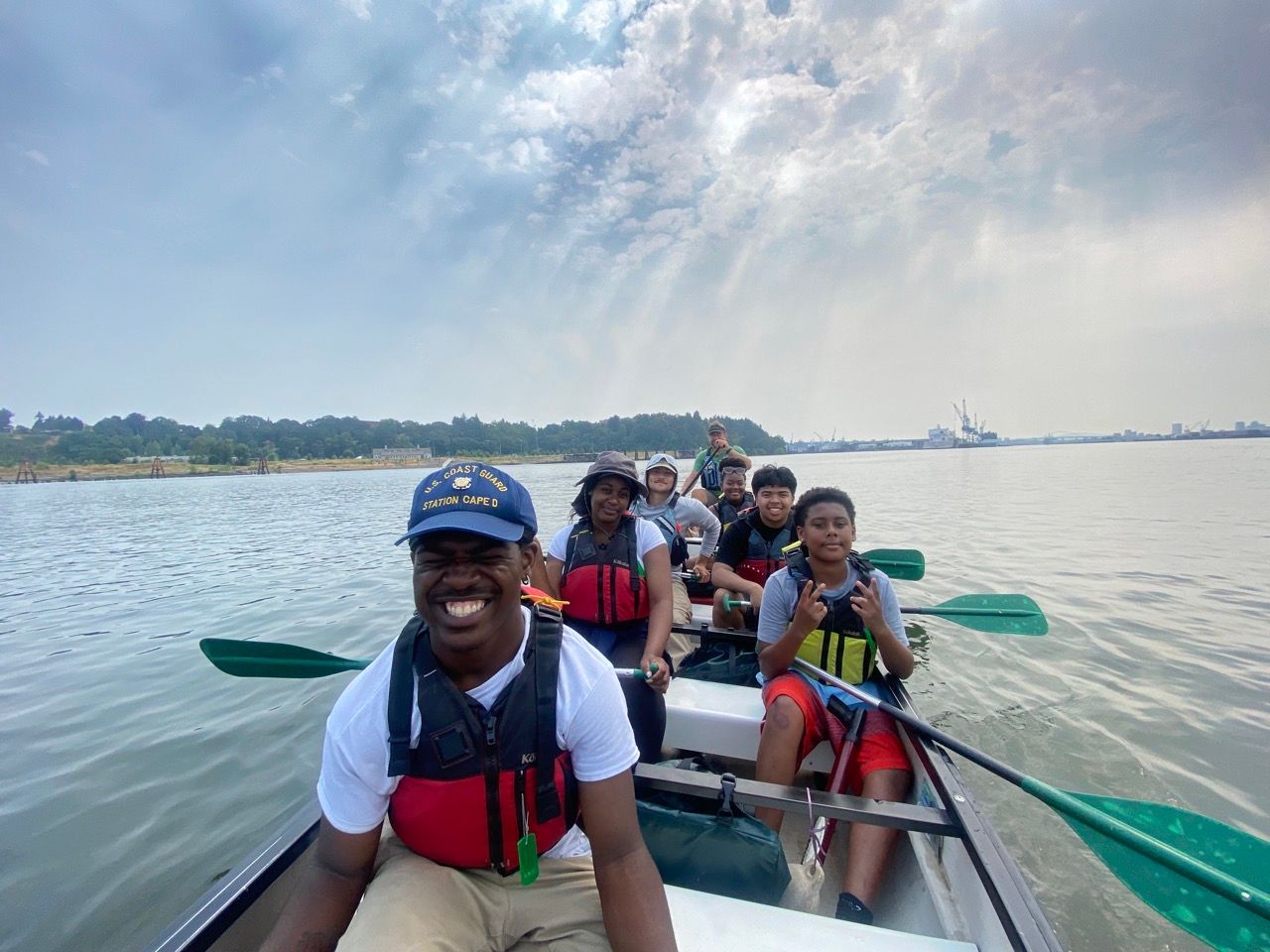
Darell McElroy spends a lot of time walking. He often crisscrosses Portland’s bridges and then walks neighborhood streets, noting the plants he recognizes and taking photos of the ones he’s eager to ID. In mid-April, he counts the holly-like leaflets of the plentiful Oregon grape. McElroy is turning twenty in the fall. He’s quick to smile with captivating warmth, and when he’s in amazed disbelief—a feeling he’s experienced often during the past two years—his shoulders shrug, he pulls his hand to his grin, and his eyes close almost to winks. Two years ago, McElroy felt hopeless and assumed he wouldn’t graduate high school. Around that time, he took his first outing with The Blueprint Foundation, a nonprofit founded by members of a local chapter of the Black organization Phi Beta Sigma Fraternity, Inc. that nurtures Black students in and out of school. Blueprint offered him deeply committed and personal mentorship, frequent and safe access to nature, and the dignity of being valued for his work. “I’m astonished,” he says. “I changed.”
Rewind to 2020. McElroy’s family had moved again and he’d started at Hosford, where his middle school classmates singled him out as “the new Black kid at school.” “My one week of fame,” he jokes darkly about the racist overtones he heard every day. A week later, COVID closed schools. For ten months, McElroy played video game and rarely went outside because it felt unsafe to be alone. When he started at Cleveland High School, it didn’t feel much different than Hosford: it’s a majority white school with only 2 to 3 percent Black students. Sports were his obvious option, but they offered little more than a distraction from his problems at home. “I was trying to chase a dream that I wasn’t even trying to chase,” he says, describing a familiar dead end that many young, low-income Black students face. Like most kids, he didn’t know what career he wanted, and sports were one of his few models of success. Jason Stroman, Director of Community Engagement for The Blueprint Foundation, describes the “huge opportunity gap” that Black students face. If they can’t afford to work for free or spend time away from responsibilities, they can’t access career exploration, networking, or internships. Their possibilities and pathways remain shrouded and inaccessible.
During McElroy’s sophomore year, he struggled at school and home, and his relationship with his girlfriend suffered. She told him honestly that she couldn’t manage both her own and his challenges if he wasn’t willing to show up for himself. He heard her, but that didn’t lessen his heartbreak when they separated. All the pain and frustration came to a head at school one day during a fit of rage that ended with him restrained on the ground. “I just couldn’t do it anymore,” he says.
In the space broken wide open by his outrage and her absence, he turned to Blueprint, which hosted meetups for Black students in the library. Soon, he joined them at Tryon Creek Natural Area, a 665-acre forested canyon in southwest Portland. Usually, he wouldn’t want to spend time in the rain, but he found “a different type of energy” in preparing saplings for planting—a sense of spaciousness and freedom. Plus, they paid him for his time. Soon, he was taking hikes that Blueprint organized every Saturday.
His senior year, McElroy joined Wednesday evening restoration work parties at Zenger Farm, a nonprofit urban farm in southeast. “It’s nice to feel the wind, feel the air; nice to clean and help an area,” he says. Getting paid $18 per hour for his work made it accessible for him. Blueprint and his school counselors worked with McElroy to find a pathway for him to receive a modified diploma. He’d recently discovered a love of writing, thanks to counseling, so they suggested he write about the more than 30 hours he’d worked at Zenger. In the past, he thought it was hard for him to learn, but writing about his experiences “flowed.” More than anything else, school is supposed to teach students their capacity to learn and the pleasure it can offer. Instead, McElroy learned this through his experiences in the natural world. Once he had it, he didn’t look back.
After he graduated in the spring of 2025, McElroy enrolled part time at Portland Community College and got a paid internship with the indigenous-led nonprofit Wisdom of the Elders, who’d met him at Zenger and enjoyed his energy and work ethic. Funded by the Gray Family Foundation and coordinated in partnership with Blueprint, the internship placed him on a restoration crew from September through December. He was ten years younger than his coworkers and felt astonished to be paid to work with plants. Looking back, that whole year felt like such a “crazy time.” he reflects. He hadn’t expected to graduate; now he had a job that paid him well. Caring for these natural places was key to caring for himself. “I’ve been through thick and thin,” he says. “I don’t want to turn it into a trauma story,” he continues, but “I feel like I’ve grown so much. I wanna keep going with that.”
Voni Young, program director at Blueprint, lights up when talking about McElroy. She relays that just that morning he’d reached out about supporting another student seeking mentorship. “He exemplifies grace and kindness,” she says. “We are all so proud of Darell,” Stroman adds. “The wonderful energy he brings to our community, the great example and high bar he sets for his peers, and how purposefully he's seized control of his own destiny.” Young, Stroman, and McElroy all express variations on the same commitment: At Blueprint, McElroy feels safe to be himself among adults who have his back. Blueprint works hard to open doors that are typically closed to young Black students; McElroy is accepting their invitation and walking through them.
In the spring, McElroy enrolled as a full-time PCC student. Wisdom of the Elders asked him back for his summer break. Every Saturday, McElroy hikes with his Blueprint community. Usually around ten students join. Two mentors pick up everyone from their homes and provide breakfast and lunch, ensuring there are zero barriers to entry. “I’m friends with everyone there,” he says with pleasure. Soon, he’ll join Blueprint for his first camping trip, and when he has a car, he hopes to become a mentor. He still doesn’t hike alone—it feels unsafe to be a young Black man alone in nature—but he doesn’t need to. He has many friends to join him.
STAY INFORMED For more inspirational stories like Darell’s, and to learn how to support or get involved in Blueprint’s transformational work, visit their website and subscribe to their monthly newsletter at theblueprintfoundation.org/newsletter-sign-up.