Community Science Project, Wild Schools, and Growing Community Roots
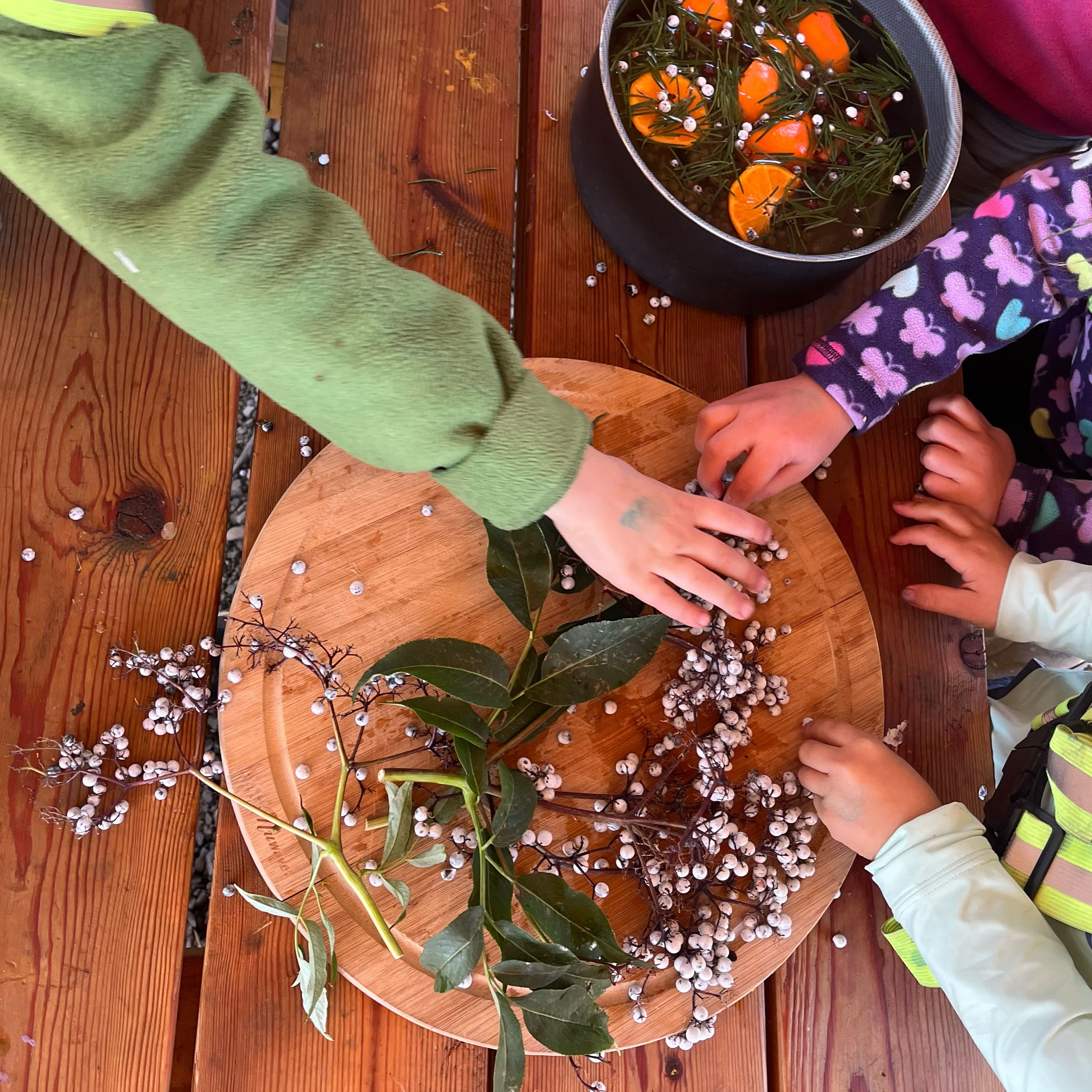
Outdoor educators of the Qapqánim Wéele (Grande Ronde) watershed nurture a learning ecosystem where diverse kids thrive
Across the road from Bird Track campground, the Upper Grande Ronde River meanders in a loose wiggle. Only nine years ago, the river didn’t have this snaking shape. A century of heavy logging, mining, and agriculture had degraded this section of the Grande Ronde into a simple, silt-heavy ditch. In 2018 and 2019, as part of the Grande Ronde Model Watershed—an initiative launched in 1992 to establish a locally-driven collaborative process for watershed restoration—a host of collaborators designed and installed curves, new threads, islands, logjams, and boulders. They engineered deep pools and planted stream-side vegetation. Their work made the water cleaner, cooler, and less flood-prone for the creatures who share this habitat.
Seasoned educator and ecologist Carrie Caselton Lowe wrote the interpretive signs at Bird Track. One reads, “habitat complexity increases biodiversity.” This statement holds true for a group of youth outdoor education programs based in the watershed that each take a distinct approach to bringing kids into nature and helping them thrive.
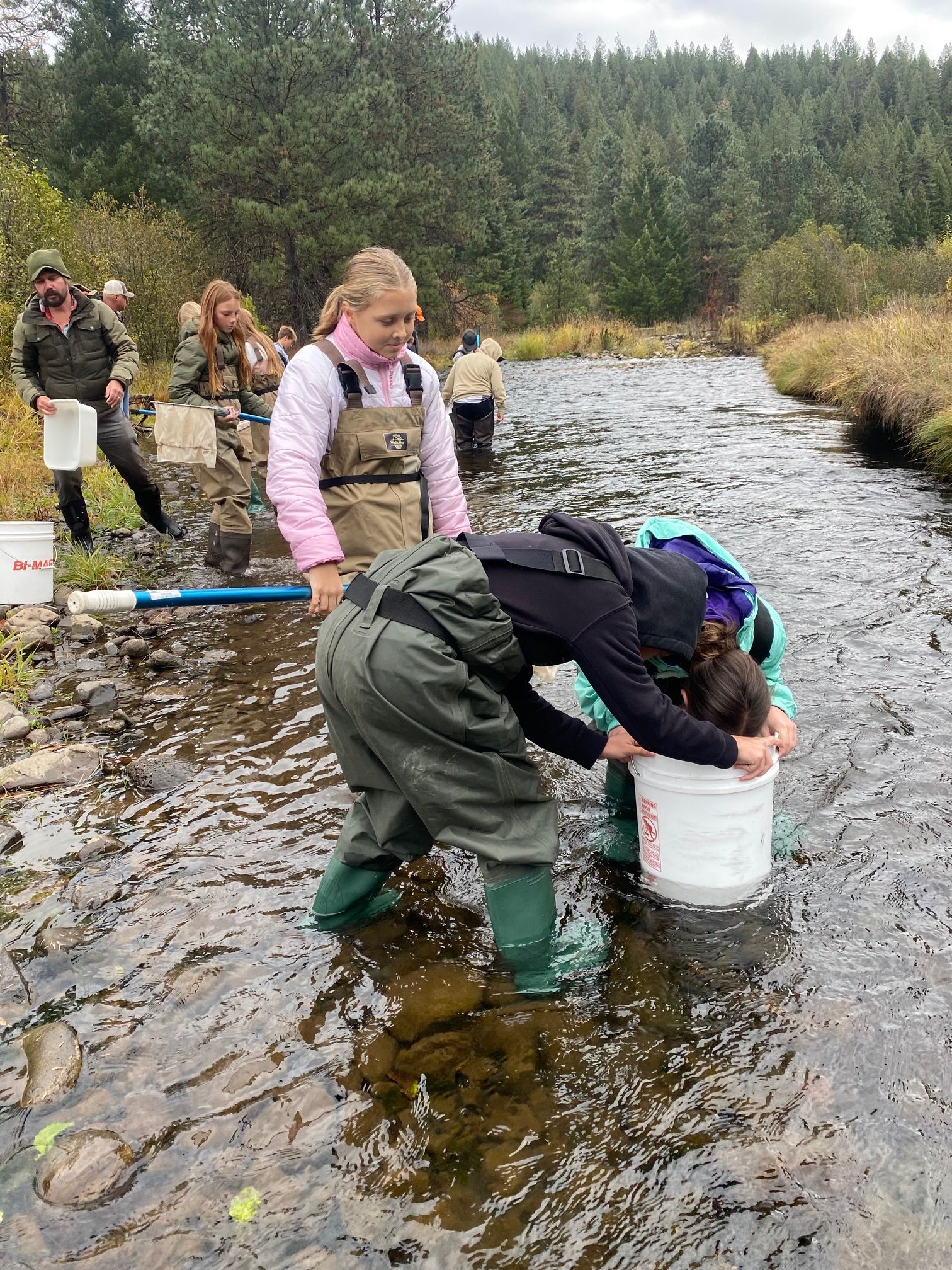
Bird Track is one of sixteen watershed restoration sites where Lowe brings students, watershed practitioners, teachers, and parents as part of the Qapqápnim Weéle - Grande Ronde Community Science Project, which she leads. Fifth grade through high school classes opt in for her field trips where students make careful observation of how the watershed is changing over time. Central to her work is securing “funds to pay Indigenous folks to guide and support us.” She knows that getting outside is good for student and teacher wellbeing, but Lowe also sees this place-based science immersion as critical workforce development.
“Restoration is happening on a hydrogeologic time scale,” she explains. For the future of the watershed, “we have to fold youth in now.”
Travel eighteen miles east of Bird Track and you reach the 4.5-acre Heritage Pond property on the edge of the city of La Grande. Owned by the Blue Mountain Conservancy, Heritage Pond is where Meghan Ballard helms the Wild Schools. Ballard has a neurodivergent child who entered first grade during COVID. The screen time was disastrous. She founded Wild Schools, an after-school program that’s “100 percent outside”—although they have a yurt for extreme weather—to serve kids who need a different environment to learn. One Friday and Saturday a month is devoted to each Wild Schools age group—preschool, elementary, and adolescent—with more offerings in the summer.
Ballard’s programs extend Lowe’s outdoor education work to pre-K through eighth graders outside the school day. The Wild Schools’ curriculum weaves in Traditional Ecological Knowledge and often blurs the line between science and art. Recently, they made fry bread and Lakota berry pudding. Often, they do cyanotype printing and work with wild clay. Kids explore and play throughout the property, including in the Plum Forest, a thicket of plum trees, and on Turkey Island, their name for a willow-covered hillock frequented by turkeys. This place is their home ground.
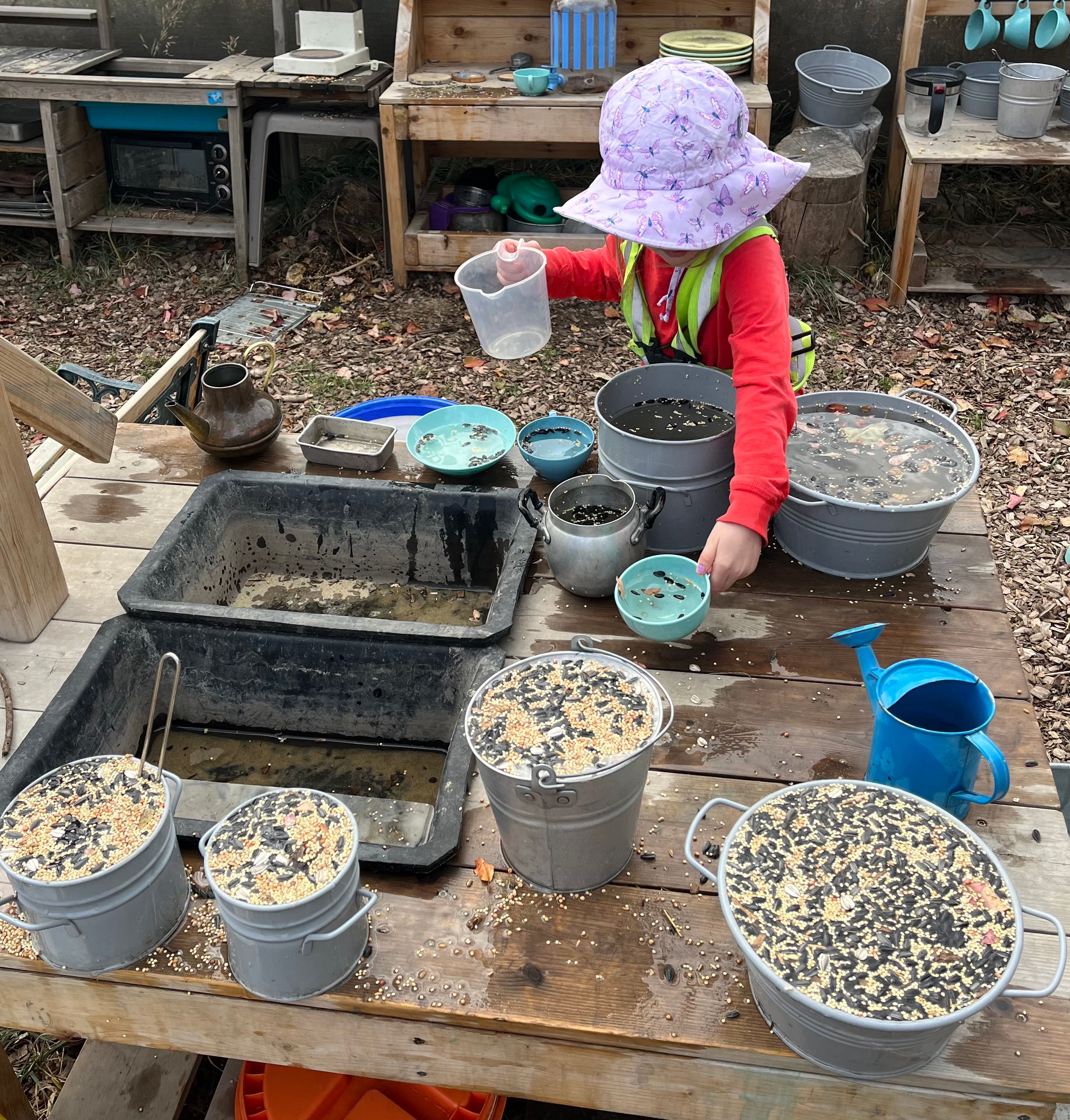
In the summer, Heritage Pond hosts Growing Community Roots, led by Kathryn Andrew and Toni Smith. Andrew is a counselor for high-needs youth. Smith is an engineer who’s been teaching kids STEM as a volunteer for decades. Six years ago, they combined their skills to create a place-based therapeutic program for seven- to eleven-year-olds with mental health diagnoses, disabilities, and behavioral health challenges. Their program runs once a week, five hours a day, for eight weeks. At the start of each summer, kids build their own stool from a cross-section of timber, choosing its height, leg positions, and shape while discussing the mechanics of their choices.
“We begin with the physical, having them work with their hands,” Smith explains. Engaging hand-eye coordination helps kids who often dissociate become embodied. Each stool creates a place to ground during opening and closing circles. The Heritage Pond property houses a 130-year-old apple orchard, and kids pick their own apple tree as a site of refuge and steady observations. Integrating place and nature is central to Growing Community Roots’ unique and effective group therapy approach.
These three programs are distinct and interconnected. The Community Science Project, Wild Schools, and Growing Community Roots all harness the power of teaching kids outside in a rooted place. Lowe and Ballard learn principles of trauma-informed care from Andrew and Smith and offer their own expertise as instructors. All three share assets including supplies, property access, fundraising, and community connections. Like the complex watershed their community seeks to restore, their programs interweave, reinforce, and reengineer the environment for children in the Qapqánim Wéele valley to learn. Together, these women are creating a complex habitat where diverse youth can flourish.
Helpful Resources
To find out how to get involved or sign up for a field trip with the Qapqápnim Weéle - Grande Ronde Community Science Project, visit www.granderondecommunityscience.org. Blue Mountain Conservancy hosts seasonal events at Heritage Pond in La Grande that are open to the public. Learn more about these events and other Wild School offerings at www.bluemountainsconservancy.org.